Introduction
For many outdoor enthusiasts and professionals, a winch is an indispensable tool that helps them overcome challenging terrain, lift heavy loads, and traverse difficult trails. However, not everyone has access to a winch or wants to invest in one due to its high cost, bulky size, and maintenance requirements. Moreover, in some situations, a winch may not be the most appropriate or efficient solution for the task at hand. In this article, we will explore the various alternatives to a winch that you can use to accomplish your off-road, towing, or hoisting goals.
Manual winch methods
If you are facing a situation where a mechanical winch is unavailable or impractical, you can resort to manual winching methods that rely on human power and simple tools. These methods are slower and require more effort than using a winch, but they can still get the job done if you use them correctly. The following are some examples of manual winching methods:
1. Hand winch: A hand winch is a portable device that consists of a drum, handle, and cable or strap. You can attach it to an anchor point such as a tree or boulder and crank the handle to pull the load towards you. Hand winches typically have a capacity of several hundred pounds and are suitable for light-duty applications such as pulling a small vehicle out of a ditch or moving a fallen branch.
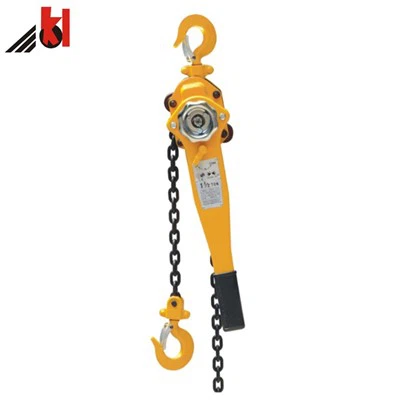
2. Come-along: A come-along, also known as a hand-operated winch, is a larger version of a hand winch that can generate more pulling force and has a ratcheting mechanism that allows you to hold the load securely in place. Come-alongs are often used by farmers, ranchers, and loggers to move heavy objects or tension wires or cables. They can also be used for winching vehicles, although the process may take longer than with a mechanical winch.
3. Tirfor: A Tirfor, also called a wire rope hoist, is a manual winch that uses a lever and a wire rope or cable to lift or pull loads. Tirfors are commonly used in construction, mining, and industrial applications, but they can also be useful for off-roading and rigging situations. Tirfors are capable of generating a pulling force of up to several tons and can be operated by one or two people.
4. Block and tackle: A block and tackle is a combination of pulleys and ropes or cables that enables you to multiply the pulling force of the load by a factor of two or more. Block and tackles are useful for hoisting heavy objects such as engines or generators, but they require some knowledge of rigging and knot tying to use them safely and effectively.
Vehicle-based methods
If you have access to a capable vehicle that can serve as an anchor or a pulling agent, you can use it to perform winching tasks without a separate winch. The following are some examples of vehicle-based winching methods:
1. Tow strap: A tow strap is a strong and flexible nylon or polyester strap that can be attached to the pull points of two vehicles to allow one to pull the other. Tow straps are easy to store, lightweight, and affordable, but they have a limited capacity and can be dangerous if not used properly. To use a tow strap, you should make sure that the vehicles are aligned properly, that the strap is not twisted or damaged, and that there is enough clearance between the vehicles.
2. Hi-Lift jack: A Hi-Lift jack, also known as a farm jack, is a versatile tool that can be used for lifting, winching, clamping, and spreading. Hi-Lift jacks are popular among off-roaders and farmers for their simplicity, durability, and multi-functionality. To use a Hi-Lift jack as a winch, you need to attach it to a rock slider, roll cage, or bumper of your vehicle and use it to pull the load towards you. Hi-Lift jacks can generate a high pulling force and can be used with a variety of accessories such as chains, cables, and straps.
3. Snatch block: A snatch block is a pulley block that can be attached to a winching point on your vehicle and used to route the cable or rope to another point, thus changing the direction of the pull and increasing the pulling force. Snatch blocks are useful for winching vehicles uphill, around obstacles, or out of tight spots. To use a snatch block, you should choose a block with a safe working load that exceeds the weight of the load you want to pull and properly secure it to the vehicle''s structure.
Other methods
Apart from manual and vehicle-based winching methods, there are several other tools and techniques you can use to achieve your winching goals. These include:
1. Pneumatic winch: A pneumatic winch is a winch that is powered by compressed air instead of electricity or hydraulics. Pneumatic winches are often used in marine and offshore applications where electric power is not available or safe. Pneumatic winches are lighter and more compact than hydraulic winches and can be run continuously without overheating.
2. Electric drill winch: An electric drill winch is a compact and portable winch that is powered by an electric drill or cordless drill. Electric drill winches are often used by hunters, campers, and DIY enthusiasts for lifting, pulling, and hauling tasks. Electric drill winches are easy to set up and operate and have a relatively low cost.
3. Block heater cord: A block heater cord is a thick and sturdy electrical cord that can be used as a temporary winch cable for light loads. Block heater cords are designed to withstand cold temperatures and harsh conditions and can be easily attached to various objects using hooks or carabiners. Block heater cords are not suitable for heavy-duty applications or high-speed winching.
Conclusion
While having a winch is undoubtedly useful in many situations, it is not always necessary or practical. By exploring alternative winching methods such as manual winches, vehicle-based winches, and other tools, you can enhance your off-road, towing, or hoisting capabilities without breaking the bank. However, it is important to remember that each winching method has its limitations and risks, and proper training, equipment, and caution are essential for safe and successful winching operations.