What are the three types of chain hoists?
A chain hoist, also known as a chain block or chain fall, is a mechanical device used for lifting heavy loads. It operates on the principle of a chain being pulled through a hoist mechanism to raise or lower the load. Chain hoists are commonly used in various industries, including construction, manufacturing, and warehouses. There are three primary types of chain hoists: manual chain hoists, lever chain hoists, and electric chain hoists. Let''s delve into each type to gain a better understanding of their functions and applications.
1. Manual chain hoists:
Manual chain hoists, also known as hand chain hoists, are the most basic and traditional type of chain hoists. As the name suggests, these hoists are powered by manual force exerted by the operator. The operator pulls down on the hand chain, which causes the load chain to move through the hoist mechanism and lift the load. The hand chain is typically made of steel and can be adjusted in length to suit different lifting requirements.
One of the key advantages of manual chain hoists is their simplicity and ease of use. They are relatively lightweight and portable, making them ideal for applications where mobility is important. Manual chain hoists are also versatile in terms of load capacity, with some models capable of lifting loads ranging from a few hundred kilograms to several tons.
These hoists are commonly used in workshops, garages, and small-scale construction projects. They are particularly useful in situations where power sources are limited or unavailable. However, manual chain hoists require physical effort from the operator and may not be suitable for lifting very heavy loads or for extended periods of use.
2. Lever chain hoists:
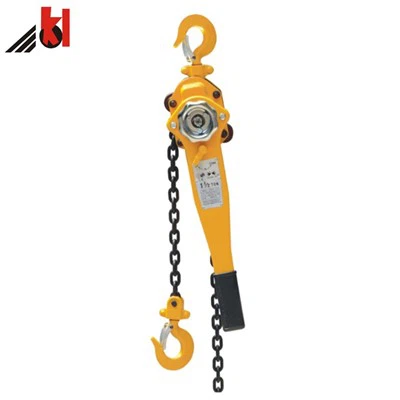
Lever chain hoists, often referred to as ratchet lever hoists, are another type of manual hoisting device. Unlike manual chain hoists that operate by pulling a hand chain, lever chain hoists utilize a lever mechanism to lift the load. The operator manually pushes or pulls the lever, which engages the gears and increases mechanical advantage, allowing the load to be lifted with minimal effort.
One of the main advantages of lever chain hoists is their ability to provide precise control during lifting and lowering operations. The lever mechanism allows for gradual and controlled movement, making them suitable for applications that require delicate handling of loads. Lever chain hoists also have a compact and lightweight design, making them highly portable and easy to transport.
These hoists are commonly used in maintenance, repair, and assembly operations, as well as in confined spaces where maneuverability is limited. They are often preferred for tasks that involve lifting loads in a vertical direction. Lever chain hoists typically have lower load capacities compared to manual chain hoists, ranging from a few hundred kilograms to a few tons.
3. Electric chain hoists:
Electric chain hoists, as the name implies, are powered by electricity and provide automated lifting capabilities. They are the most advanced and efficient type of chain hoists available in the market. Electric chain hoists feature an electric motor that drives the hoisting mechanism, eliminating the need for manual force.
The key advantage of electric chain hoists is their ability to lift heavy loads with minimal effort from the operator. They offer smooth and precise control over lifting and lowering operations, making them suitable for applications that require precise positioning of loads. Electric chain hoists also offer variable lifting speeds and can be equipped with additional features such as overload protection and remote control.
These hoists are commonly used in construction sites, manufacturing facilities, and warehouses, where large and heavy loads need to be lifted frequently. Electric chain hoists are available in a wide range of load capacities, from a few hundred kilograms to several tons.
In summary, manual chain hoists, lever chain hoists, and electric chain hoists are the three primary types of chain hoists available. Each type has its own advantages and applications. Manual chain hoists are simple, portable, and versatile; lever chain hoists provide precise control and maneuverability; and electric chain hoists offer automated lifting capabilities for heavy loads. The choice of chain hoist depends on the specific lifting requirements, load capacity, and operational preferences in different industries and applications.