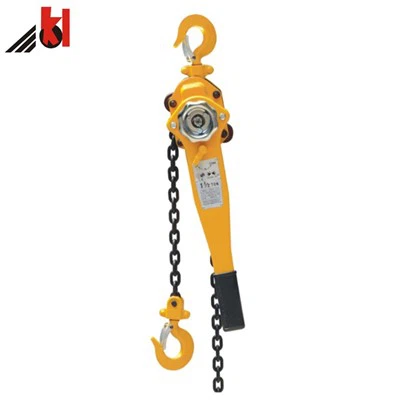
Electric hoist is a small lifting machinery commonly used for lifting equipment. It consists of two parts: a hook and a mobile crane, with an electric motor driving each for the lifting of the hook and the traveling of the crane. The lifting motor drives the drum to rotate, thereby driving the lifting or lowering of the hook; The traveling motor drives the lifting mechanism to move horizontally on the I-beam, thereby driving the crane forward or backward.
The main circuit uses circuit breaker QF as circuit breaker protection, contactors KM1 and KM2 control the lifting motor M1, KM3 and KM4 control the forward and reverse operation of the traveling motor M2. They all achieve forward or reverse rotation by changing the phase sequence applied to the three-phase power supply of the motor. YB is an electromagnetic brake installed at the end of the lifting motor M1 to ensure accurate positioning of the hook.
The control circuit uses an electric motor to control the electric furnace. The upper two branches are used for lifting and lowering control, and the two branches are controlled by hanging type compliance buttons SB1 and SB2 to start and stop. SQ1 is used as an upper limit switch for terminal protection of lifting; The following two branches respectively control the forward and backward movement of the vehicle, which are controlled by the suspended coincidence buttons SB3 and SB4 for start and stop. SQ2 and SQ3 are the limit switches for forward and backward movement, respectively, serving as terminal protection for horizontal movement. The fuse FU serves as short-circuit protection.
Forward control: Press the button SB3 and SB3 to disconnect the normally closed contacts first, ensuring that the contactor KM4 will not be energized and closed. The normally open contacts of SB3 will then close, and the contactor KM3 will be energized and closed. The traveling motor M2 will be energized and started. When moving to the specified position, release the power outage of SB3 and KM3, and stop M2. If the operator makes an error in operation or for some reason switches to the SB3 contact short circuit, when moving to the terminal position, the switch SQ2 is disconnected, the contactor KM3 is disconnected and released, and the motor stops accurately.
Similarly, readers can analyze backward control, upward control, and downward control on their own.
The installation of electric hoists involves erecting guide rails with I-beams on both sides of the opposite grab, installing an operating hook on the guide rails, and then using a button box to move up, down, left, and right on the ground for control. It is one of the commonly used mobile tools in factories.